
Short answer
Tétouan is Morocco’s smallest medina and, in UNESCO’s words, “indisputably the most complete”: a town rebuilt by refugees from Andalusia, enclosed in 5 km of walls with seven gates on the slopes of Jebel Dersa
The point of connection between Morocco and Andalusia from the 8th century, Tétouan was rebuilt after the Reconquest by Granadans expelled from Spain, who gave it its art, its architecture and its crafts, including Tétouan zellige. Inscribed in 1997 for that Moroccan-Andalusian synthesis (criterion ii), as a fortified coastal town set against the mountains (iv) and as a point of contact between two civilisations and two continents (v), it has kept a “practically intact” plan and houses that “have remained intact” in their majority, despite “floors illegally added”. It is protected by Law 22-80, managed through the 1982 master plan, the medina development plan and a cooperation with the Government of Andalusia; conservation priority goes to the ramparts, gates and borjs.
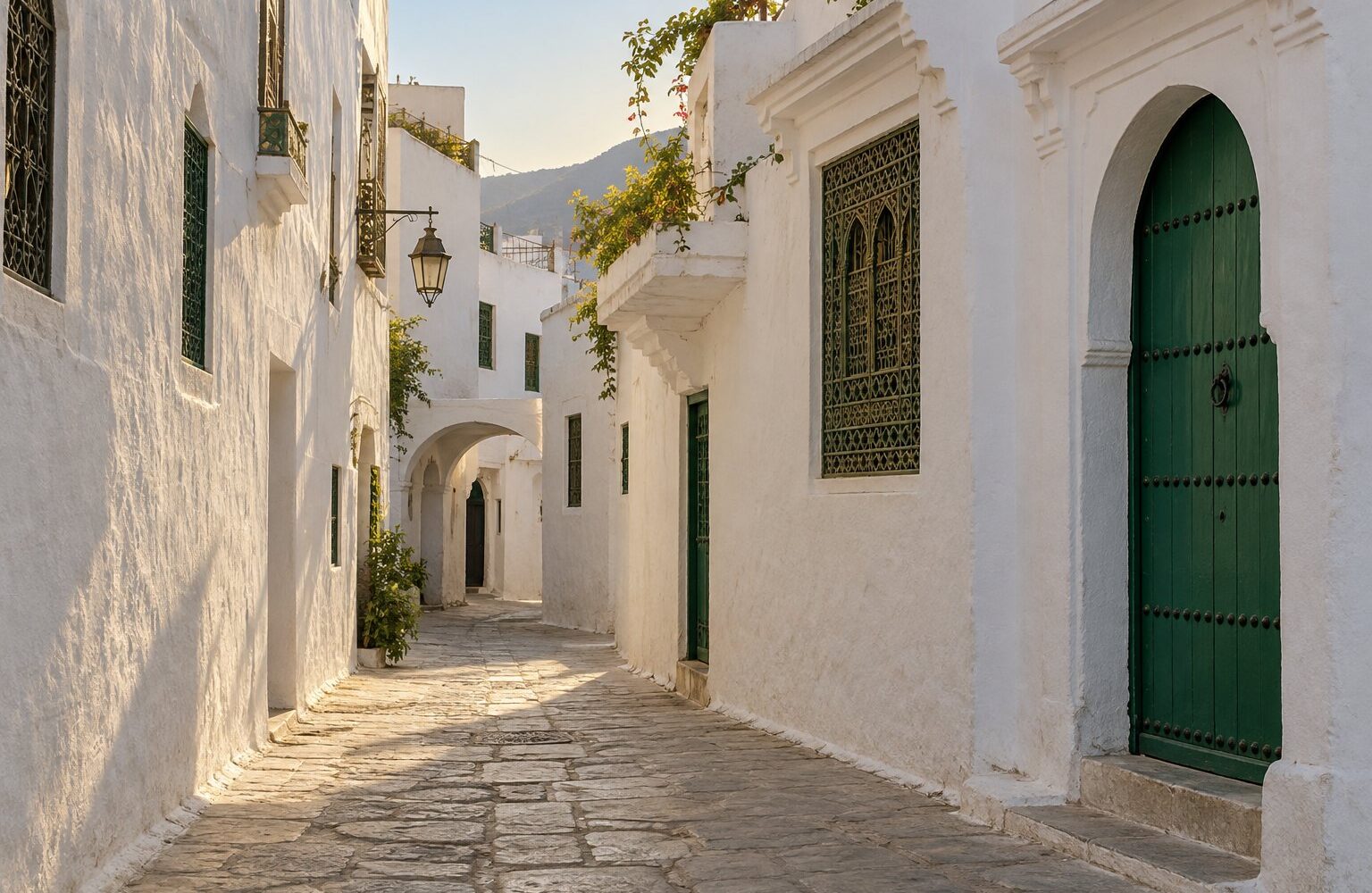
Tétouan is the medina riad buyers know least and the one that has changed least. White, compact, on a slope, it is the direct heir of Granada, and its domestic architecture, its stucco, its moulded zellige and its patios have a refinement the great medinas have lost. This guide describes its formation, structure, buildings and crafts from UNESCO’s assessment, then what its protection regime means for an owner, with particular attention to Tétouan zellige, now near extinction. It belongs to the Cities section.
How did Tétouan take shape?
In brief
An ancient town, destroyed then rebuilt at the end of the 15th century by refugees from Granada, extended from the 17th to the 18th century, and marked in the 20th by the Spanish Protectorate.
UNESCO places Tétouan “on the steep slopes of the Jebel Dersa” and recalls that “in the Islamic period it had particular importance from the 8th century onwards since it served as the point of connection between Morocco and Andalusia”. The founding moment is the end of the 15th century: “after the Reconquest, the town was rebuilt by refugees in this region who had been expelled by the Spanish”, and “this is well illustrated by its art and architecture which reveal clear Andalusian influence”. The Tétouan historian M’hamed Benaboud adds that the Granadan immigrants who settled in Tétouan after the Castilian conquest of Granada in 1492 continued to develop their craft on the Moroccan side of the strait.
Criterion (iv) holds that “its expansion from the beginning of the 17th century continued until the end of the 18th century and is reflected in its fortifications, architecture, synthesis of Moroccan and Andalusian cultures and its urban fabric”. The present walls and gates date “back to the 18th century and still conserve their configuration and original materials”. In the 20th century Tétouan was the capital of the Spanish Protectorate, and UNESCO notes that its urban and architectural features “have influenced the architectural and artistic development during the period of the Spanish Protectorate”: the Ensanche, the Spanish new town, converses with the medina instead of turning its back on it.
How is the medina organised?
In brief
A 5 km wall pierced by seven gates, main streets linking the gates and serving squares, fondouks, mosques and zawiyas, then smaller lanes towards semi-private residential areas. All on 6.5 hectares, on a slope.
UNESCO describes the plan precisely: “the Medina of Tétouan is surrounded by a historic wall of approximately 5 km in length and accessed by means of seven gates. The urban layout is characterised by main streets linking the gates to one another and giving access to open spaces (squares and smaller squares) and public buildings such as funduqs, mosques, zawayas and to the artisan and commercial districts, and on the other hand to smaller lanes leading to passages and semi-private residential areas.” The 1997 ICOMOS evaluation adds that the medina descends gently from the north-west and is divided into three quarters, including Rabat al-Aala, the 16th-century extension to the north-west.
That hierarchy, street, lane, passage, semi-private derb, is the same in every medina, but Tétouan is according to UNESCO its most legible example: “an original urban fabric characterised by the hierarchy of streets and division of residential, commercial and artisan areas following a clearly defined plan”. The inscribed area, 6.5 hectares, is tiny beside the 280 hectares of Fez or the 700 of Marrakesh; it is a town you cross on foot in a quarter of an hour.
Which buildings and which crafts?
In brief
Ramparts, gates and borjs; zawiyas, fountains, hammams, ovens and historic silos; patio houses in the Granadan spirit. And two institutions: Dar Sanaa, the school of arts and crafts, and the National Institute of Fine Arts.
| Element | What UNESCO says |
|---|---|
| Ramparts, gates, borjs | 18th century, original configuration and materials; conservation priority |
| Zawiyas, fountains, hammams, ovens, silos | “Have retained their authenticity, be it in their shape, their construction materials or their decoration or even for some, their function” |
| Fondouks, mosques | Public buildings served by the main streets |
| Houses | “The majority of houses have remained intact, even although some floors have been illegally added and interior separations have been installed” |
| Dar Sanaa, National Institute of Fine Arts | School of arts and crafts and institute that “testify to an ancestral tradition and an opening onto the world today” |
The crafts are what set Tétouan apart. Its zellige, fired twice, moulded piece by piece from an iron-rich clay that cannot be cut, with “non-homogeneous” shades and a limited palette, is according to Benaboud “on the way to extinction”: “few craftsmen remain who still keep this know-how”, and “many buyers of old houses in the Tétouan medina demolish and rebuild the tiles, without considering the preservation of the zelliges”. The guide on zellige details the two techniques. Dar Sanaa, founded under the Protectorate to train in the traditional crafts, is the institution that keeps the thread; the Tétouan patio house, closer to the Granadan casa than to the Marrakchi riad, is described in the guide on the riad.
What threatens the medina?
In brief
Less than elsewhere: UNESCO cites neither overcrowding nor urban pressure, but floors added illegally, interior partitions, and ramparts, gates and borjs that need priority works.
The 2009 assessment is the calmest of any Moroccan medina. Integrity is complete: “the boundaries of the property include all the attributes that are necessary to express its Outstanding Universal Value”; but “some of the attributes require conservation measures and priority as concerns conservation work is given to the ramparts, gates and to the borjs (fortified watch towers)”. Authenticity rests on “its original urban layout practically intact and its initial design with surrounding wall, gates, and fortified constructions”. The only damage noted is the one that strikes every medina: “some floors have been illegally added and interior separations have been installed”, that is, added storeys and the division of large houses into flats.
To which must be added the threat UNESCO does not measure but Benaboud describes: the disappearance of Tétouan zellige, replaced by Fez work during renovations. In Tétouan, keeping and restoring an old floor or dado is an act of preservation that the World Heritage assessment does not yet record.
What is the protection regime, and what does it mean for an owner?
In brief
Law 22-80, with no text specific to the medina; a 1982 master plan giving it “high priority”, a 1996 regional development plan and a medina plan; management shared among the commune, planning services, local authorities and the Ministry of Culture; cooperation with Andalusia on rehabilitating the centre.
The texts: “protection measures are essentially regulated by the different laws for the listing of historic monuments and sites, in particular Law 22-80 (1981) concerning the conservation of Moroccan heritage”. ICOMOS noted in 1997 that the medina is not legally protected by any text of its own; protection runs through the general law and the planning documents. The actors: “the municipality, the town-planning services, local authorities and the Ministry for Culture are all responsible for the management and conservation of the property”, the Ministry “orients and assists the different services”. The tools: “the Master Plan for Tétouan, developed by the Ministry of Housing and Planning in 1982, giving high priority to the conservation and rehabilitation of the Medina”; “the Development Plan for the North-West Region prepared in February 1996”, with “the obligation to conserve and rehabilitate the medinas”; and “the Development Plan for the Medina of Tétouan”, which “includes provisions for conservation and management and takes into account the universal value of the site”. The municipality “cooperates with the Government of Andalusia (Spain) in carrying out rehabilitation work in the centre of the Medina”.
For an owner this means the rules apply through the medina’s development plan and the Culture services’ opinion rather than through a specific listing text: any project follows the ordinary building permit, with the heritage opinion, and adding a floor, the only damage UNESCO cites, is the refusal ground to anticipate. The land tenure of Andalusian houses, often jointly owned for generations, is checked before any payment, as Land title vs melkia explains.
Watch out
In Tétouan the value of an old house lies in what the great medinas have lost: its moulded zellige, its stucco, its woodwork and its original patio. Replacing them with Fez zellige and catalogue tadelakt, as the city’s historians observe, destroys precisely what was bought. Before any works, have the original finishes inventoried and photographed, and look for a restorer rather than a tiler.
When to consult a professional
An architect who knows the medina, and the maalems of Dar Sanaa
Renovating in Tétouan calls for an architect registered with the Order who knows the medina plan and the regional Culture services, and maalems trained in the Tétouan crafts, whose lineage runs through Dar Sanaa and the few surviving zellige workshops. A decoration restorer, for old stucco and zellige, is better than a replacement. The notary comes first, for the land. Built Morocco recommends no practitioner.
Why is Tétouan called Morocco’s Andalusian city?
Because it was rebuilt at the end of the 15th century by refugees from Granada driven out by the Reconquest, who transplanted their art, architecture and crafts. UNESCO inscribed it in 1997 for that Moroccan-Andalusian synthesis.
How big is the Tétouan medina?
6.5 inscribed hectares, within a wall of about 5 km pierced by seven gates. It is one of Morocco’s smallest medinas but, according to UNESCO, the most complete.
Which law protects the Tétouan medina?
Law 22-80 of 1981 on heritage conservation, with no text specific to the medina; protection also runs through the 1982 master plan, the 1996 regional plan and the medina development plan.
What is Tétouan zellige?
A zellige moulded piece by piece from an iron-rich local clay, fired twice, with non-homogeneous shades, unlike Fez zellige cut with a hammer. It is near extinction and deserves restoring rather than replacing.
Can you add a floor to a house in the Tétouan medina?
Illegally added floors are the only damage to authenticity UNESCO notes in Tétouan; that is the refusal ground to anticipate before the heritage services.
Sources
- UNESCO World Heritage Centre. Medina of Tétouan (formerly known as Titawin): Statement of Outstanding Universal Value, integrity, authenticity, protection and management (2009). https://whc.unesco.org/en/list/837
- ICOMOS (1997). Evaluation of nomination 837, Medina of Tétouan. https://whc.unesco.org/document/154409
- Boujnane, I. (2022). Zellige : les tuiles de Tétouan menacées d’extinction. Médias24, 7 December 2022 (interview with M’hamed Benaboud). https://medias24.com/2022/12/07/zellige-les-tuiles-de-tetouan-menacees-dextinction/